A Silk Message from the Past Century
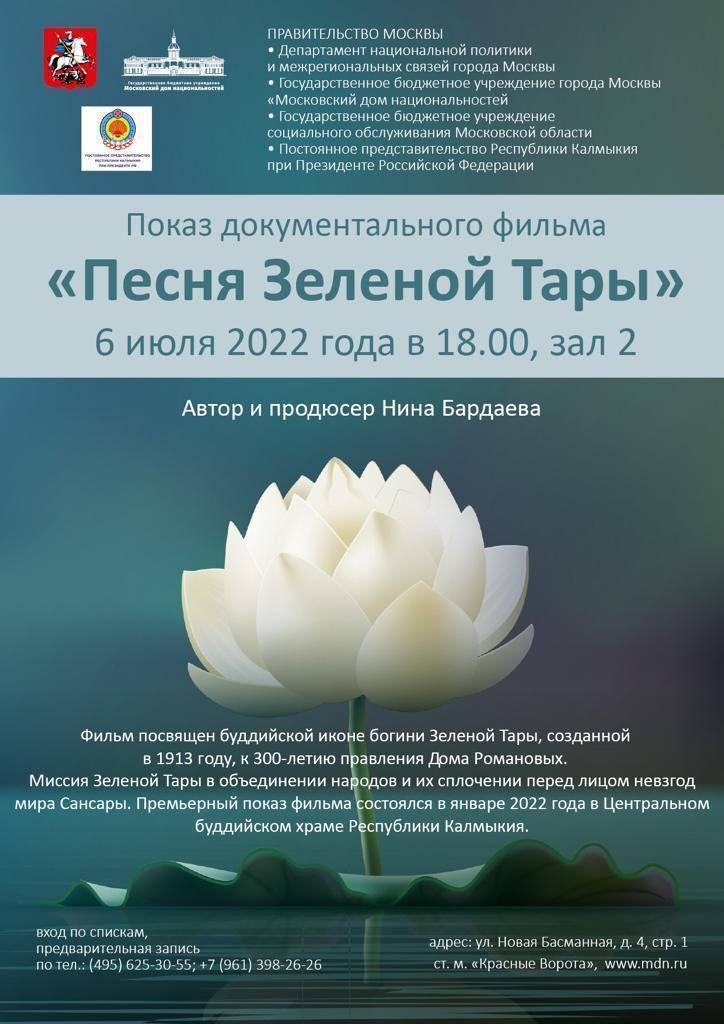
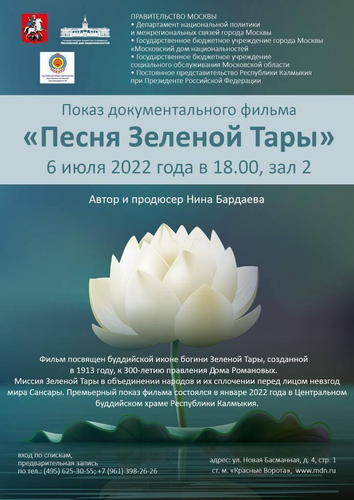
On July 6, 2022, a screening of the documentary film “Song of the Green Tara” will take place at the Moscow House of Nationalities. We expect guests by 6 p.m. The film's author, Nina Bardaeva, admitted that the idea to create a film about the Buddhist icon — the thangka of the bodhisattva Green Tara — was born during the pandemic, when the personal responsibility of each individual had a significant influence on curbing the growth in the number of the infected. Through the image of Green Tara, the author conveys to viewers the idea of the unification and solidarity of peoples in the face of the adversities of the world of Samsara. The image of the bodhisattva was embroidered on a silk cloth measuring more than six square meters in 1913, for the 300th anniversary of the rule of the House of Romanov in Russia. The image was created in the khurul of the Bolshederbetovsky ulus of Stavropol province under the guidance of lamas who knew the canons of Buddhist iconography. The thangka was embroidered by innocent girls in the unique technique of satin stitch. The girls' mentors were older craftswomen, but they were not allowed to touch the silk. The premiere screening of the film took place in January 2022 at the Central Buddhist Temple of the Republic of Kalmykia. Scholars and specialists in the field of Buddhist art of the South of Russia took part in its creation; viewers will see archival photographs, documents, and video chronicles from the early 19th century. Alongside the scholarly interpretation of the canons of Buddhist iconography, the film narrates the folk image of the bodhisattva and her role in the spiritual revival of people after the social upheavals of the beginning and middle of the past century in Russia. The screening of the documentary film “Song of the Green Tara” within the walls of the Moscow House of Nationalities serves the purpose of preserving the spiritual and moral values based on respect for the honor and national dignity of the peoples of Russia, which is especially relevant in the Year of Folk Art and Intangible Cultural Heritage of the Peoples of Russia.