The Annual Tantric Rituals Have Begun in Kalmykia
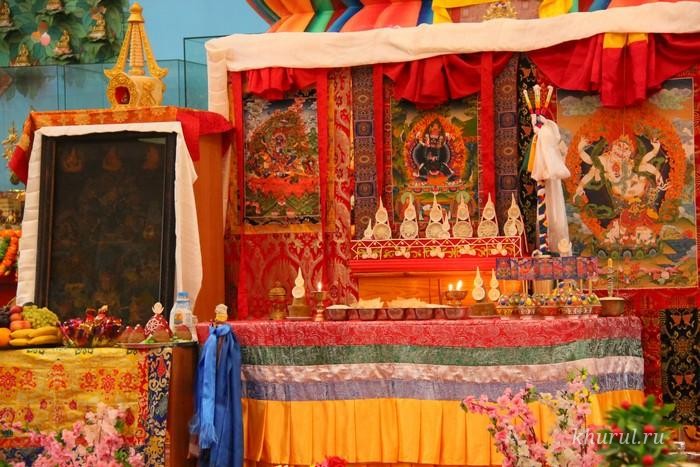
The first day of the annual tantric rituals took place at the Central Khurul of Kalmykia “The Golden Abode of Buddha Shakyamuni”.
Before the beginning of the ritual, the Head of the Buddhists of Kalmykia, Telo Tulku Rinpoche, addressed the believers. In his speech, the Supreme Lama of Kalmykia asked everyone to be understanding about the measures taken, as they are related to the health and safety of both the residents of Kalmykia and the guests. Telo Tulku Rinpoche also briefly explained the essence of the ritual being performed that day. “When we say wealth, this word has several meanings and forms. First of all, it is our merit — buyan. When much buyan is accumulated, the other forms of wealth increase automatically, so today there is an opportunity to accumulate buyan for our future, happiness, and development,” Rinpoche stated. “On this day I would like to thank our volunteers, those people who took part in the preparation for the rituals. Especially those who help the khurul on a permanent basis. On behalf of the monastic community, I thank you all. Thank you very much!” Telo Tulku Rinpoche added.
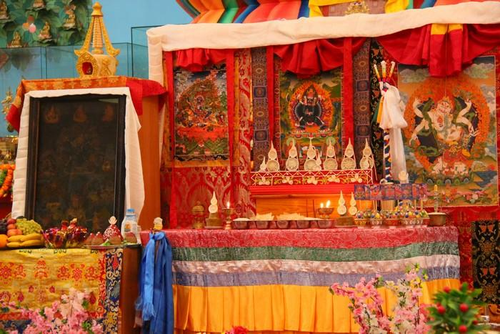
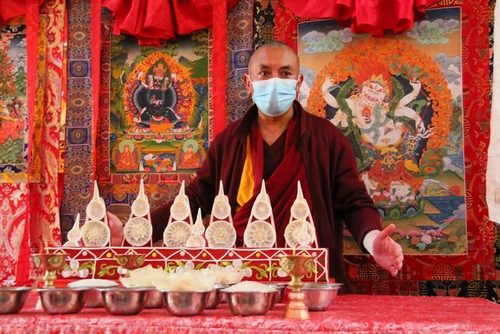
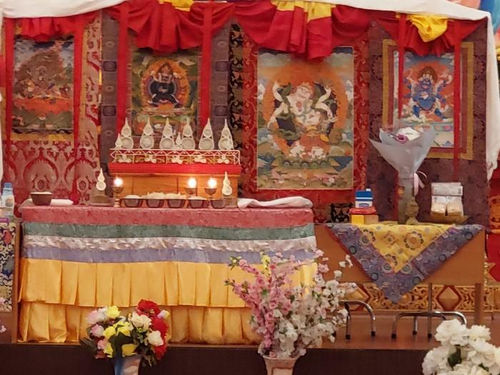
The monastic community of Kalmykia traditionally opened the series of rituals with the “Yangdrub” ritual. Under the guidance of the Shajin Lama of Kalmykia, Honorary Representative of His Holiness the 14th Dalai Lama in Russia, Mongolia, and the CIS countries, Telo Tulku Rinpoche, the monks performed the ritual relying on White Mahakala. The ritual was held in two sessions, during which the monks recited texts of praise and propitiation to Gonkar (White Mahakala) for the accumulation of spiritual merit, wisdom, and spiritual wealth for the benefit of all sentient beings, and also made offerings to the protector with a request to grant all sentient beings good fortune, longevity, health, well-being, and wealth.
During the ritual, the monks and laypeople made a circumambulation around the khurul, invoking well-being and good fortune, pronouncing blessings (yöräls): “May our land be blessed!”, “May people be happy and know no suffering!”, “Happiness and well-being to the peoples of Kalmykia!”, “Long life and prosperity to His Holiness the Dalai Lama!”. In their hands the believers carried embroidered bright khadaks, ritual objects, and offerings.
“Yangdrub” is a ritual for invoking well-being, wealth, and happiness. This ritual is directed not only toward material well-being, but also toward spiritual health and the increase of merit; it is directed toward the well-being not only of all people, but of all sentient beings. That is, it is a ritual that attracts many different opportunities, creates the necessary conditions for a prosperous life, and for gaining positive qualities, health, good fortune, and good karma — in other words, spiritual wealth.
This ritual includes the consecration of the “Yangbum” vessels of wealth, so three days before the beginning of the ritual the believers of Kalmykia began bringing them to the Central Khurul. Over these three days more than 3,000 vessels were collected in all. The “Yangbum” is a sealed copper vessel containing medicinal herbs and grain crops, such as wheat and barley, valuable types of wood, for example sandalwood, as well as precious metals — gold, silver, precious stones, and incense.
Due to the unfavorable coronavirus situation in the republic, the khurul is closed to visitors for the duration of the annual rituals; however, all believers will be able to take part in the ritual by connecting to the broadcast of the Central Khurul's official YouTube channel https://www.youtube.com/channel/UCzZCs3mTmQz6Xe1aQvaa.. and Instagram (khurul_official).
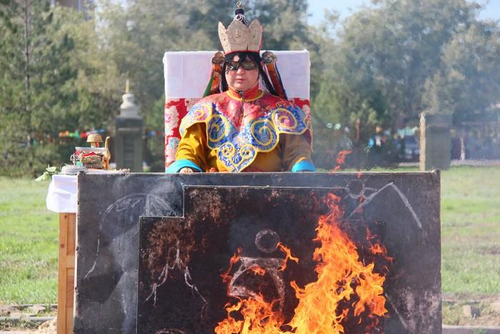
Tomorrow, October 3, the second ritual — “Jinseg” (fire puja) — will take place. We remind you that. Names for the prayer service can be sent to the email address moleben@khurul.ru or placed in the special box at the main gates of the khurul. If desired, an offering can be made via the QR code indicated on the khurul's website or also placed in the special box at the main gates of the abode.