His Holiness the Dalai Lama. Live Broadcast. Teachings on the Composition “Fabricated Words of Recognizing the Mother ‘Melody of the Echo’”
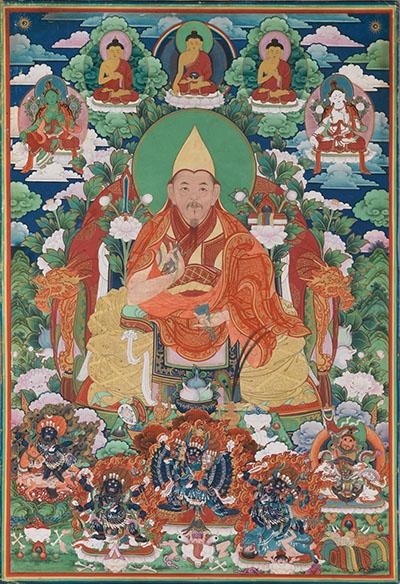
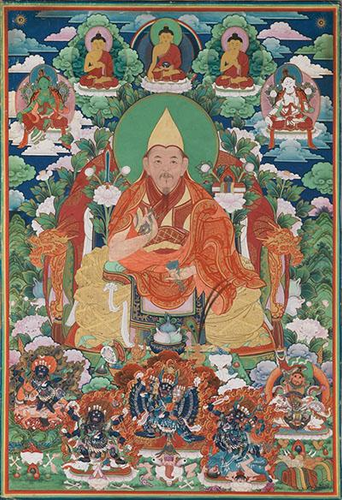
On February 8, 2021, His Holiness the Dalai Lama grants teachings on Changkya Rolpai Dorje's composition “Fabricated Words of Recognizing the Mother ‘Melody of the Echo.’” After the main part of the teachings, a question-and-answer session will take place. The teachings are granted at the request of Lama Zopa Rinpoche and the Foundation for the Preservation of the Mahayana Tradition (FPMT). Download the text in Russian: a-ma-ngo-dzin_russ_ed.pdf [155.93 Kb] (downloads: 358) Approximate broadcast time: 6:30-8:00 a.m. (Moscow time). The live broadcast from Dharamsala will be accompanied by simultaneous translation into Russian. When watching the broadcast, we earnestly ask viewers to observe the social distancing recommended in their countries of residence. Changkya Rolpai Dorje III (Tib. lcang skya 03 rol pa’i rdo rje) was born in 1717 in the Drakkar region, where the Nub Padmo De monastery (Tib. nub padmo’i sde dgon) is located, near Lianzhou (Tib. lang gru), modern-day Wuwei. Nub Padmo De was one of four monasteries founded in this region in the 13th century by Sakya Pandita Kunga Gyaltsen (Tib. sa skya paN + Di ta kun dga ‘rgyal mtshan; 1182-1251) and Pakpa Lodro Gyaltsen (Tib. ‘ phags pa blo gros rgyal mtshan; 1235-1280). His father was Tsangpa Guru Tenzin (Tib. tshangs pa gu ru bstan ‘dzin; dates of life unknown), and his mother was named Bukyi (bu skyid). By origin, the members of Changkya Rolpai Dorje's family were Monguors. In 1720, Rolpai Dorje was recognized as the reincarnation of Changkya II Ngawang Lobsang Choden (Tib. lcang skya 02 ngag dbang blo bzang chos ldan; 1642-1714) and brought to his residence, the Gonlung Jampa Ling monastery (Tib. dgon lung byams pa gling), one of the four most important Gelugpa monasteries in Amdo. In 1724, after Rolpai Dorje's home monastery was destroyed by Qing troops in response to the uprising led by Lobsang Danjin (blo bzang dan jin; dates of life unknown), he was brought to the court of the Yongzheng Emperor. Later, Rolpai Dorje was also recognized as the reincarnation of the great Sakyapa scholar and statesman Pakpa Lodro Gyaltsen (Tib. ‘phags pa blo gros rgyal mtshan; 1235-1280). At the court of the Yongzheng Emperor, Rolpai Dorje studied side by side with the prince who years later became the Qianlong Emperor (Ch. 乾隆; reigned 1735-1796). Their relationship proved extremely important. Changkya became Qianlong's chief Buddhist mentor and adviser on all matters related to Buddhism, including art, literature, religious empowerments and practices, as well as on diplomatic matters. His education included the study of most of the languages used in the Qing Empire, including Manchu, Chinese, Mongolian, and Tibetan, as well as the various Buddhist subjects that a lama was supposed to be taught. In 1734, Changkya Rolpai Dorje made his first journey to Lhasa. At that time, the Yongzheng Emperor permitted him to accompany the Seventh Dalai Lama Kelsang Gyatso (Tib. tA la’i bla ma bskal bzang rgya mtsho; 1708-1757) to the Tibetan capital. This trip gave Changkya Rolpai the opportunity to study under the Dalai Lama, as well as to make offerings to the main monasteries of Lhasa and present gifts from the Qing emperor. In 1735, Changkya went to Shigatse, where he visited the Tashilhunpo monastery and met the Fifth Panchen Lama Lobsang Yeshe (Tib. paN chen bla ma 05 blo bzang ye shes; 1663-1737). Rolpai Dorje took novice vows from the Panchen Lama and received from him the name Yeshe Tenpa Dronme (ye shes bstan pa’i sgron me). A few days later, in the presence of the Panchen Lama and other high lamas, he took full monastic vows. In 1736, when the Yongzheng Emperor died, Changkya was forced to give up his studies under the Panchen Lama and returned to Beijing. In parting, the Dalai Lama and the Panchen Lama presented him with religious statues and other valuable gifts. When Changkya Rolpai Dorje arrived in Beijing, the newly enthroned Qianlong Emperor, with whom he had grown up and studied, appointed him chief administrative lama of the capital. Having received this position, Changkya urged Qianlong to hand over the disputed border lands to the Dalai Lama. Although the emperor rejected this request, he partly followed Rolpai Dorje's advice by granting the Dalai Lama a substantial annual allowance. After the secular leader Gyurme Namgyel (Tib. ‘gyur med rnam rgyal) was executed in Lhasa in 1751 and internal political tensions there reached their peak, Qianlong officially declared the Dalai Lama the political and spiritual leader of Tibet. Tukwan III Lobsang Chokyi Nyima (Tib. thu’u bkwan 03 blo bzang chos kyi nyi ma; 1737-1802), a student and biographer of Rolpai Dorje, asserts that this important decision was made largely thanks to Rolpai Dorje's advice. It is evident that the Qianlong Emperor, enraged by the murder of his ambans (representatives) in Lhasa, was preparing to hand over full administrative power in Tibet to Manchu representatives. Kneeling before the emperor, Changkya began to implore him to refrain from such a step and instead to vest political power in the Dalai Lama. After the death of the Seventh Dalai Lama, Qianlong sent Rolpai Dorje to Lhasa on a second mission. Among Tibetan officials there were disputes over whether the regent of the new Dalai Lama would hold both spiritual and secular power at once. The Kalons (Tib. bka’ blon), or members of the cabinet of ministers, sought to seize secular power and to leave only spiritual matters to the Dalai Lama. Changkya advised the emperor to vest the regent with full spiritual and secular power in order to avoid conflict among the members of the cabinet of ministers. The emperor granted the regent the authority of spiritual leader and relied on the ambans (the Qing Empire's envoys in Lhasa), who helped him limit the power of the secular elite from the cabinet of ministers. In 1757, Changkya again set out for Lhasa. This time he was surrounded by a large retinue, including a minister, several officials, and two imperial physicians. During his stay in Lhasa, Rolpai Dorje carried out various assignments of the emperor related to spirituality and politics, and kept Qianlong informed about what was happening in the regions of Inner Asia, as far as Ladakh in the west. He took direct part in the search for the Eighth Dalai Lama Jampel Gyatso (Tib. ta lai bla ma 08 ‘jam dpal rgya mtshо; 1758-1604) and wrote a biography of the Seventh Dalai Lama. At the same time, Changkya studied under high lamas, primarily the Sixth Panchen Lama Lobsang Palden Yeshe (Tib. paN chen bla ma 06 blo bzang dpal ldan ye shes; 1738-1780). In 1779, Rolpai Dorje arranged for the Panchen Lama to travel to Beijing for the birthday of the Qianlong Emperor. In honor of this visit, a new monastery was built in Chengde modeled on Tashilhunpo. At that time, Changkya Rolpai Dorje performed religious and diplomatic functions, explained to the Panchen Lama how one is expected to present oneself to the emperor, and translated their conversations about the Dharma. During this visit to Beijing, the Panchen Lama fell ill with smallpox and passed away. Among Rolpai Dorje's chief teachers were Lobsang Yeshe (Tib. blo bzang ye shes; 1663-1737), Ngawang Jampa (Tib. ngag dbang byams pa; 1682-1762), and Lobsang Chodzin (Tib. blo bzang chos ‘dzin; 1717-1786). Besides Qianlong and Tukwan III, Rolpai Dorje's students included Konchok Jigme Wangpo (Tib. dkon mchog ‘jigs med dbang po; 1728-1791) and Kelsang Tubten Jigme Gyatso (Tib. skal bzang thub bstan’ jigs med rgya mtsho; 1743-1811). His collected works number more than two hundred pieces. Changkya Rolpai Dorje's work as a translator was by no means limited to oral translations, although this was one of his primary duties at the imperial court. He also supervised the creation of (Mongolian, Tibetan, Manchu, Chinese, and Chagatai) dictionaries and the written translation of Buddhist teachings. As the administrative lama of Beijing, he played an important role in the founding of Yonghegong, a monastic college for Mongolian, Manchu, and Chinese monks. Like Wutaishan (Tib. ri bo rtse lnga; Ch. 清凉山), this college was an entire complex that included an imperial palace and a Tibetan Buddhist monastery. Changkya Rolpai Dorje also played a key role in developing the systems of iconography, cataloging, and inscription that proved incredibly important to the Qianlong Emperor's Buddhist art projects.