LAMRIM CHENMO” WILL BECOME AVAILABLE IN THE KALMYK LANGUAGE
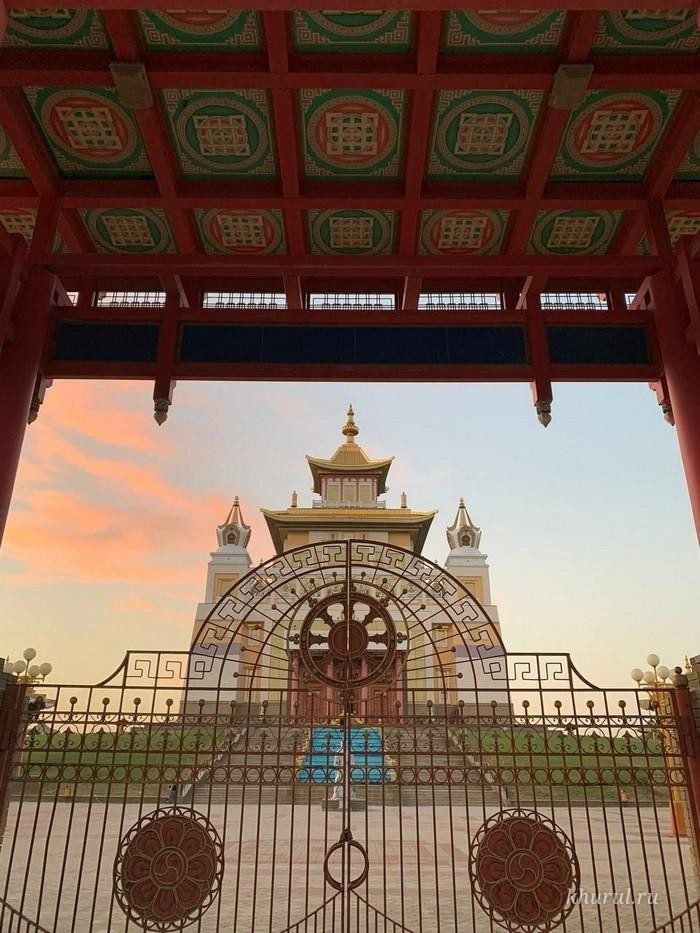
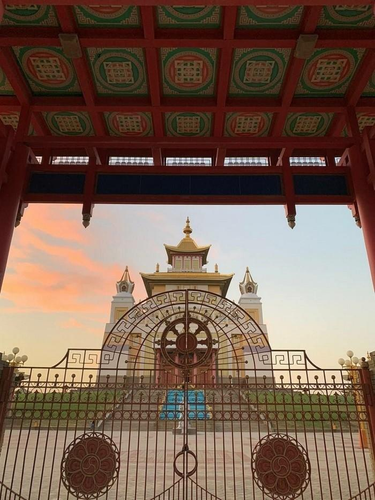
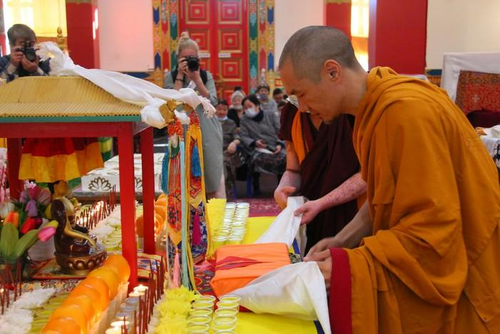
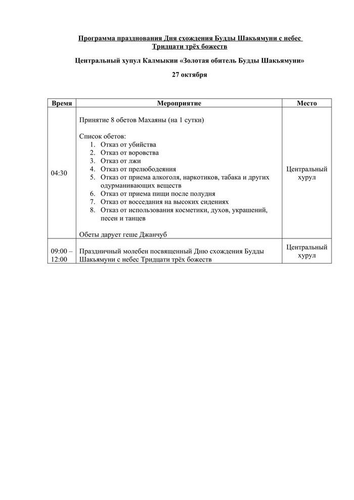
“Lamrim Chenmo,” or “The Great Treatise on the Stages of the Path to Enlightenment,” is one of the most important works written by Lama Tsongkhapa, the founder of the Gelug school. It systematizes and sets forth in the most detailed manner the most important ideas of the Buddha’s teaching, from the preliminary practices all the way to the attainment of Enlightenment. “Lamrim Chenmo” is revered by many Buddhists throughout the world in the same way that the Bible and the Quran are revered by the followers of other spiritual traditions. In Dzungaria and Kalmykia, more than a dozen khuruls in various corners of the steppe were devoted to the study of “The Great Treatise on the Stages of the Path to Enlightenment.” It is impossible even to imagine that such a treatise would not have been translated into the Oirat language! However, in the turbulent events of past years we failed to preserve our manuscripts of the “Lamrim.” And even in Mongolia, where hundreds of Oirat texts are carefully preserved, only two manuscripts of “The Great Treatise on the Stages of the Path to Enlightenment” are known. Through great effort, our countryman Alexander Ivanovich Ledzhinov managed to obtain a copy of one of them. On October 27, on the day of the celebration of the Descent of Buddha Shakyamuni from the heaven of the Thirty-three Deities, the copy of the “Lamrim” text in the Oirat language will be officially handed over to the Central Khurul of Kalmykia “The Golden Abode of Buddha Shakyamuni” during a solemn prayer service. This fundamental work of Lama Tsongkhapa, in the translation of the great Oirat monks of the past, will take its rightful place in the main Buddhist temple of Kalmykia. According to the senior administrator of the khurul, Yonten Gelung, the significance of this event is extraordinarily great: “The return of the Lamrim Chenmo in our native language to Kalmykia is an extraordinary event! After more than a hundred years of oblivion, a truly unique text is returning to us, important for research by scholars and for study and practice by the faithful. The rarest sacred texts of our people are kept in hundreds of repositories around the world, and our task is to gather them, study them, and make them the heritage of the people.” “Previously, the Lesser Lamrim was translated into the Kalmyk language, and the pre-press preparation of the Middle Lamrim is also being completed. Now the time has come to begin work on preparing a translation of the Great Lamrim into the Kalmyk language. This will be difficult work, but it is worth it, for our language is able to describe and reveal for its reader, without difficulty, the finest facets of the most complex Buddhist terminology and Buddhist wisdom,” Yonten Gelung added in conclusion.