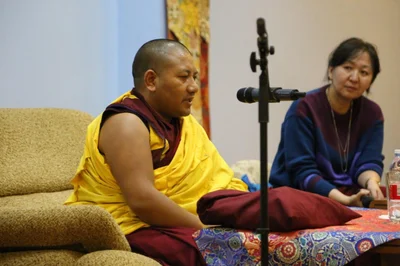
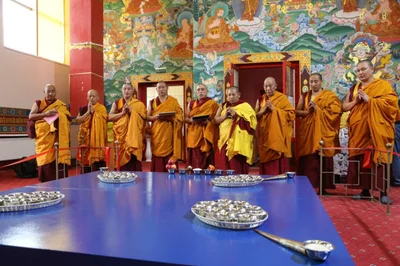
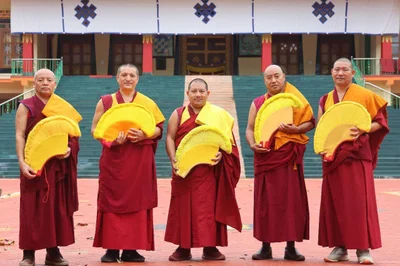
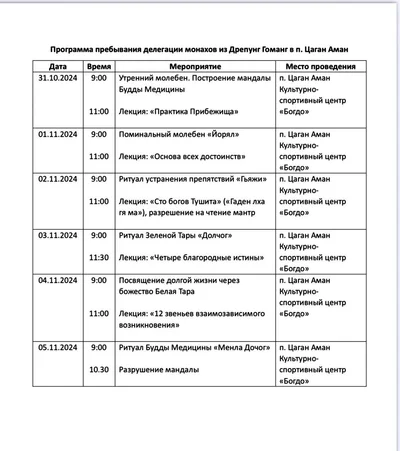
The Venerable Geshe Lharampa Tenzin Sangpo Rinpoche gives daily lectures at the khurul
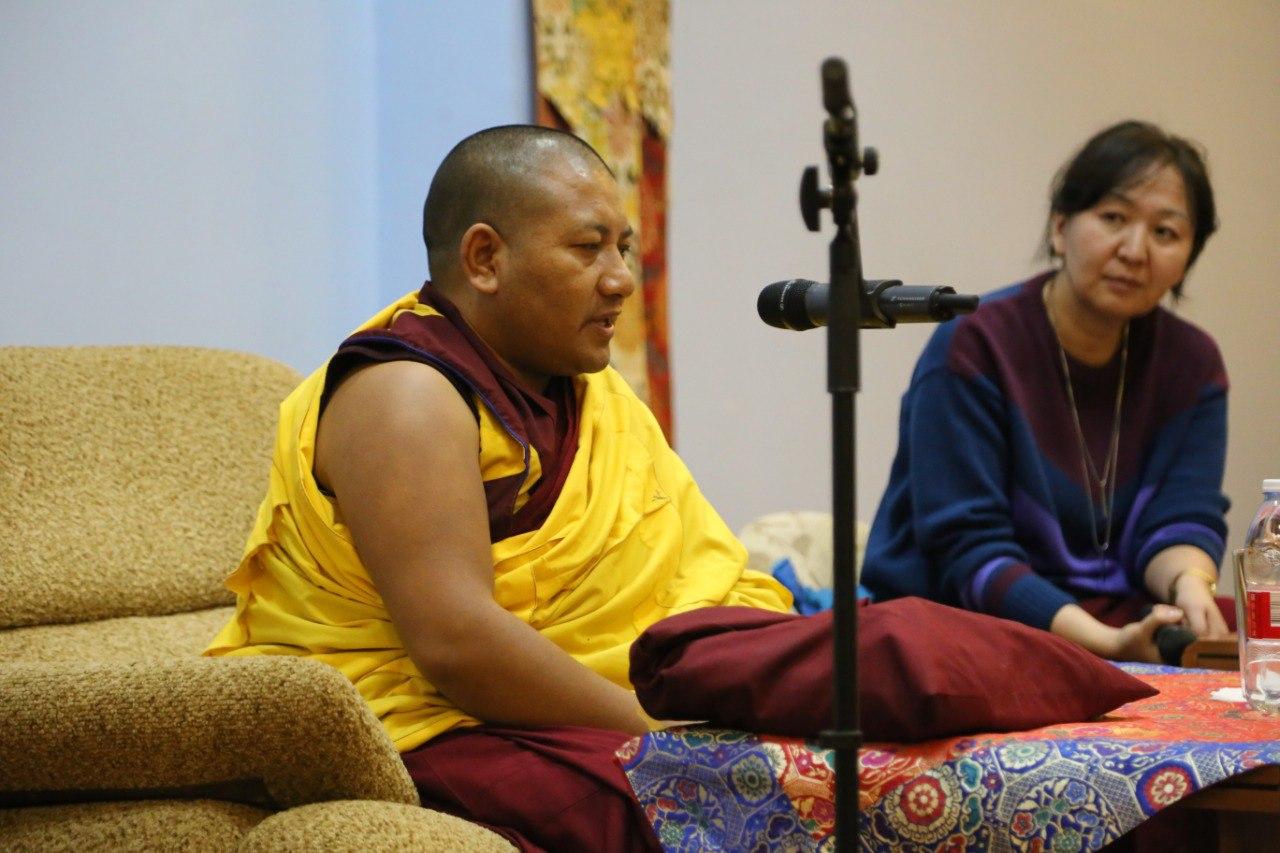
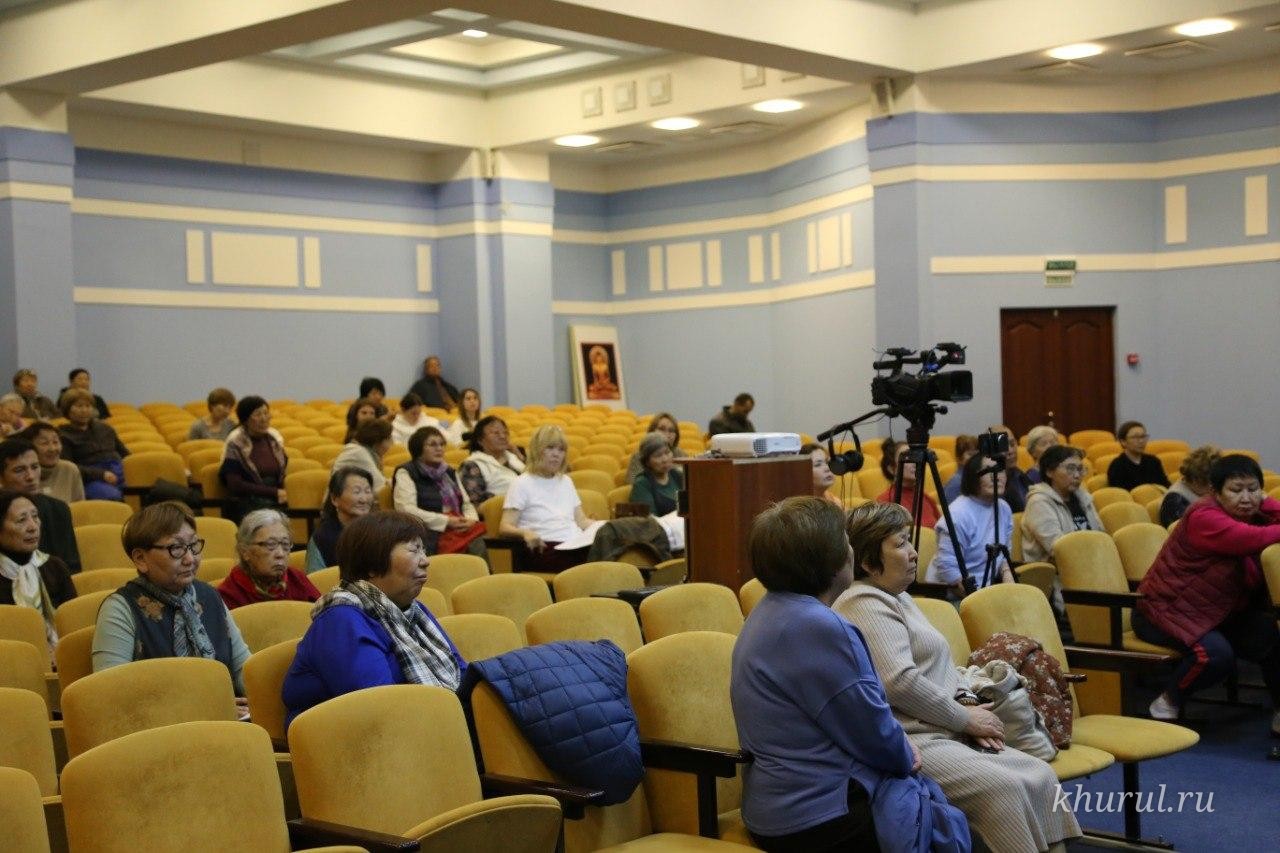
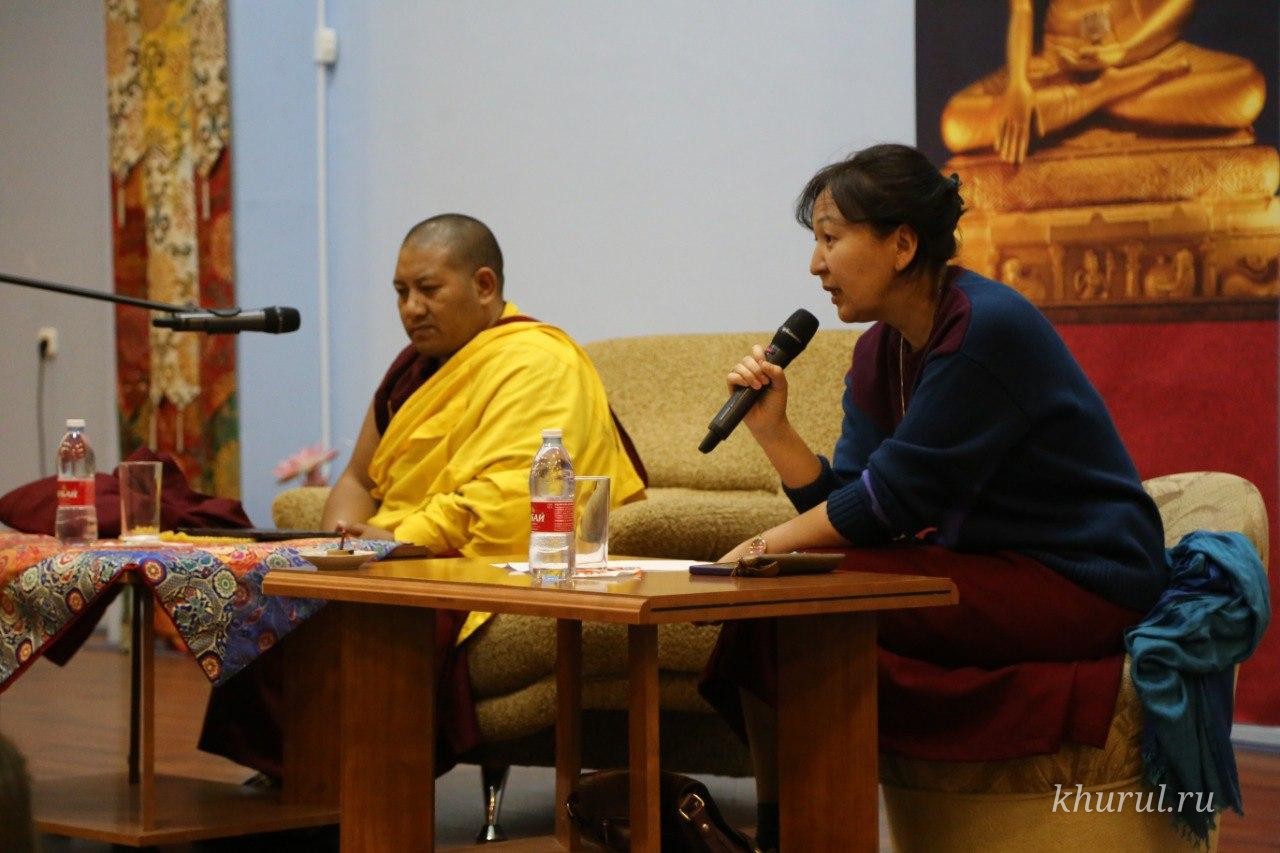
Today is the third day of the lectures. As a reminder, on these days the Venerable Geshe Lharampa Tenzin Sangpo Rinpoche speaks daily within the walls of the Central Khurul of Kalmykia about
the 12 links of dependent origination. It is a very deep and important topic for every believer to understand. This is the theory that explains how samsara arises, why a person suffers, and how to put an end to suffering.
At the first meeting, the high Teacher of course spoke about the fundamentals of Buddhism, about the importance of faith in the Three Jewels: in the Buddha, the Dharma, and the Sangha, and, accordingly, about following a moral way of life and not causing harm to those around us. Together with the congregation he examined one of the first links — “Ignorance” (unknowing); it is precisely with this that everything begins: because of it we have no opportunity to see the truth of the path, all the mistakes we make are only because of ignorance, and in accordance with this we begin to experience suffering!
Then, at the second lecture, Geshe Lharampa Tenzin Sangpo Rinpoche examined in detail the following two links, speaking about formative karma (formative action) and about consciousness. “All those actions that we perform are precisely what shape our karma, wholesome or unwholesome. And that is why it is very important to adhere to the laws of cause and effect: if you lay down good causes, then you receive a good result; if the opposite, then a corresponding result,” Rinpoche noted. It was also said that all the actions we perform are, as it were, “imprinted” at the level of our consciousness and do not pass without a trace. And therefore consciousness can be called a kind of “vessel,” a “storehouse” of karmic imprints, being the basis that leads us to a wholesome or unwholesome rebirth.
Today the lecture will continue. It begins at 17.30, in the conference hall of “The Golden Abode of Buddha Shakyamuni.”