
Instruction of the 14th Dalai Lama
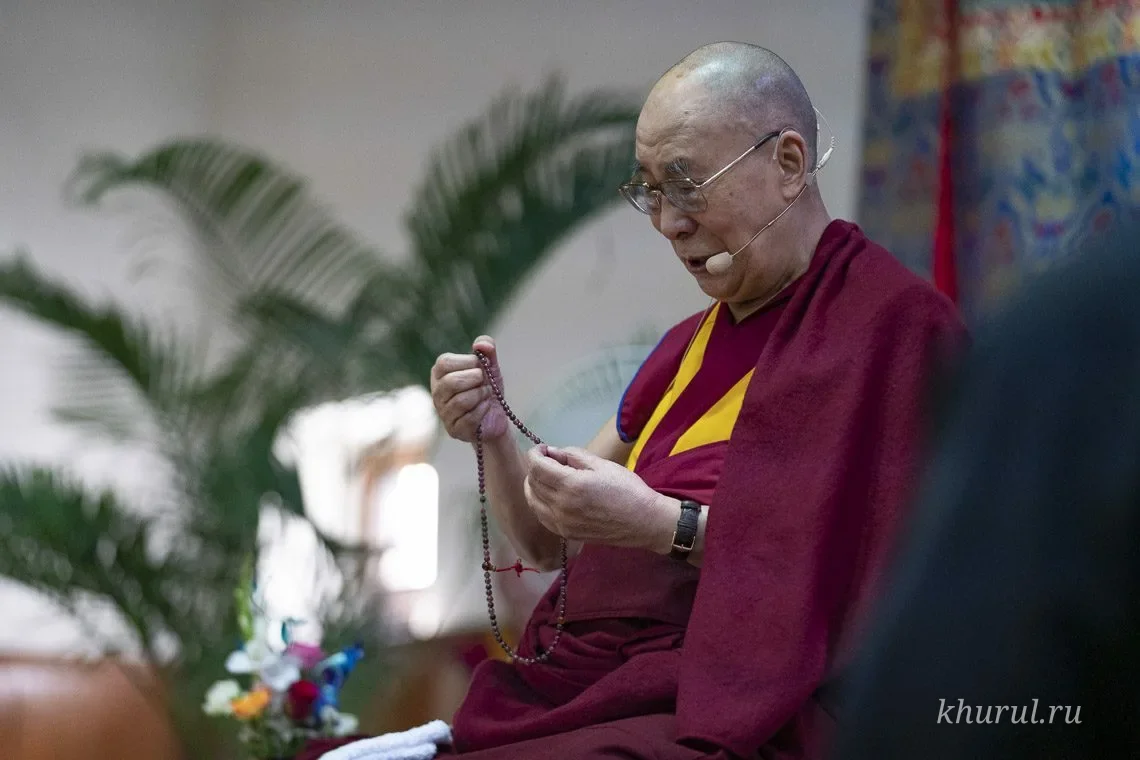
Imagine that you recite one round of “mani” on your prayer beads. The strength and duration of this virtue depend on the goal you hold in your mind.
For example, the goal is to be born a human in the next life. If you pray, “May I obtain a human body in my next life,” then the recitation becomes a virtue directed precisely at this goal. When in your new birth you actually obtain a human body, the task will be fulfilled — and the strength of this virtue will be exhausted.
Another goal is to attain liberation. But if you make the aspiration, “May this virtue become the cause of my liberation,” the situation changes. Even if in your next life you are born a human but do not yet attain liberation, the strength of the virtue will not vanish. It will be preserved — through hundreds, thousands, hundreds of thousands of rebirths — until the goal is achieved. And only on the day of attaining liberation will this strength be spent.
Now the goal is to bring benefit to all beings. Imagine that, while reciting “mani,” you think of the welfare of all living beings, caring for all the “mothers.” In this case the strength of one round of “mani” will act endlessly — as long as space exists and beings live.
Therefore, virtue performed with bodhichitta — for the benefit of countless beings — does not run out over time. The strength of even one round of “mani,” dedicated to the benefit of all, is preserved as long as the world exists.


