Preserving the Institution of Monasticism Is an Important Topic
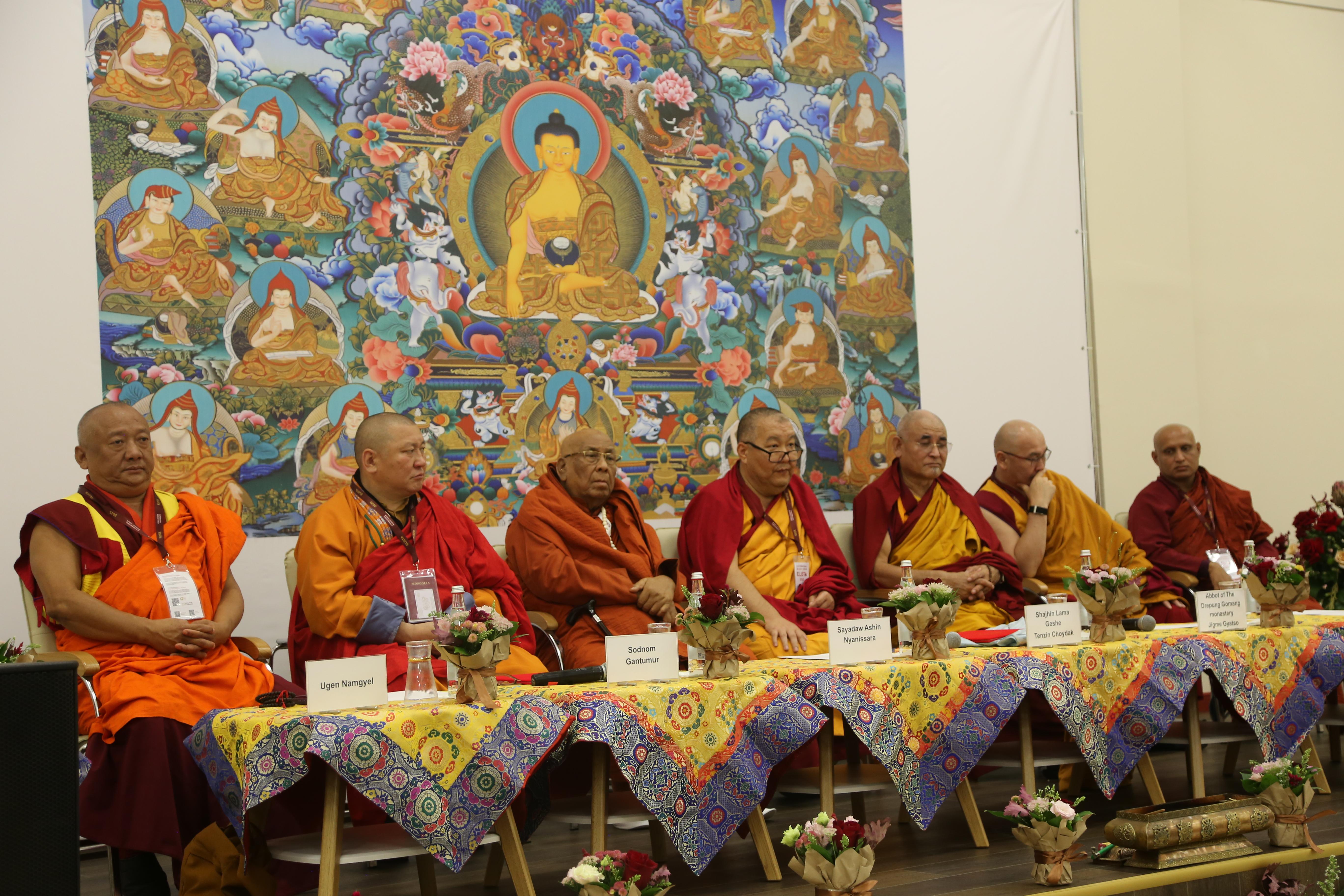
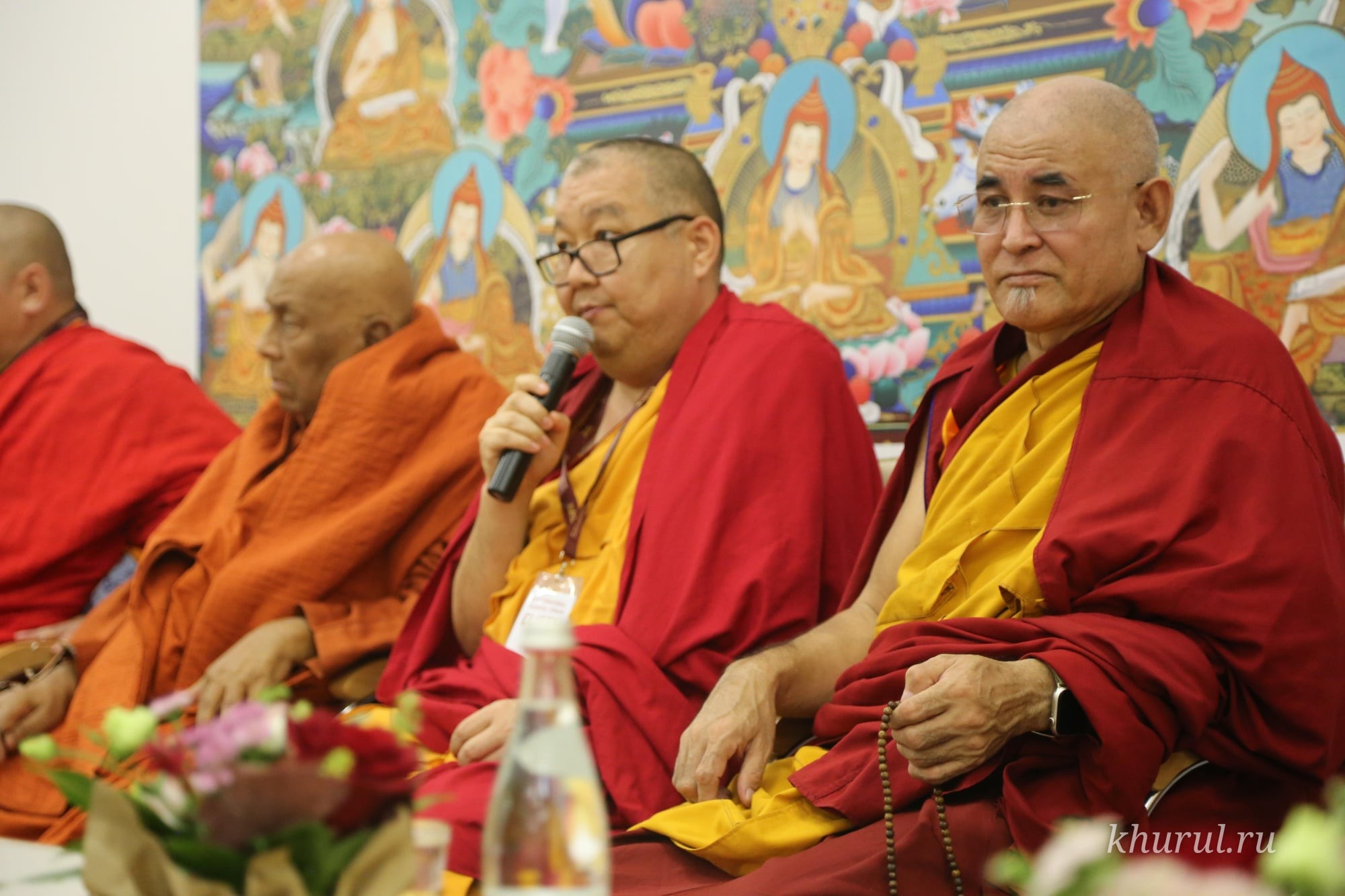
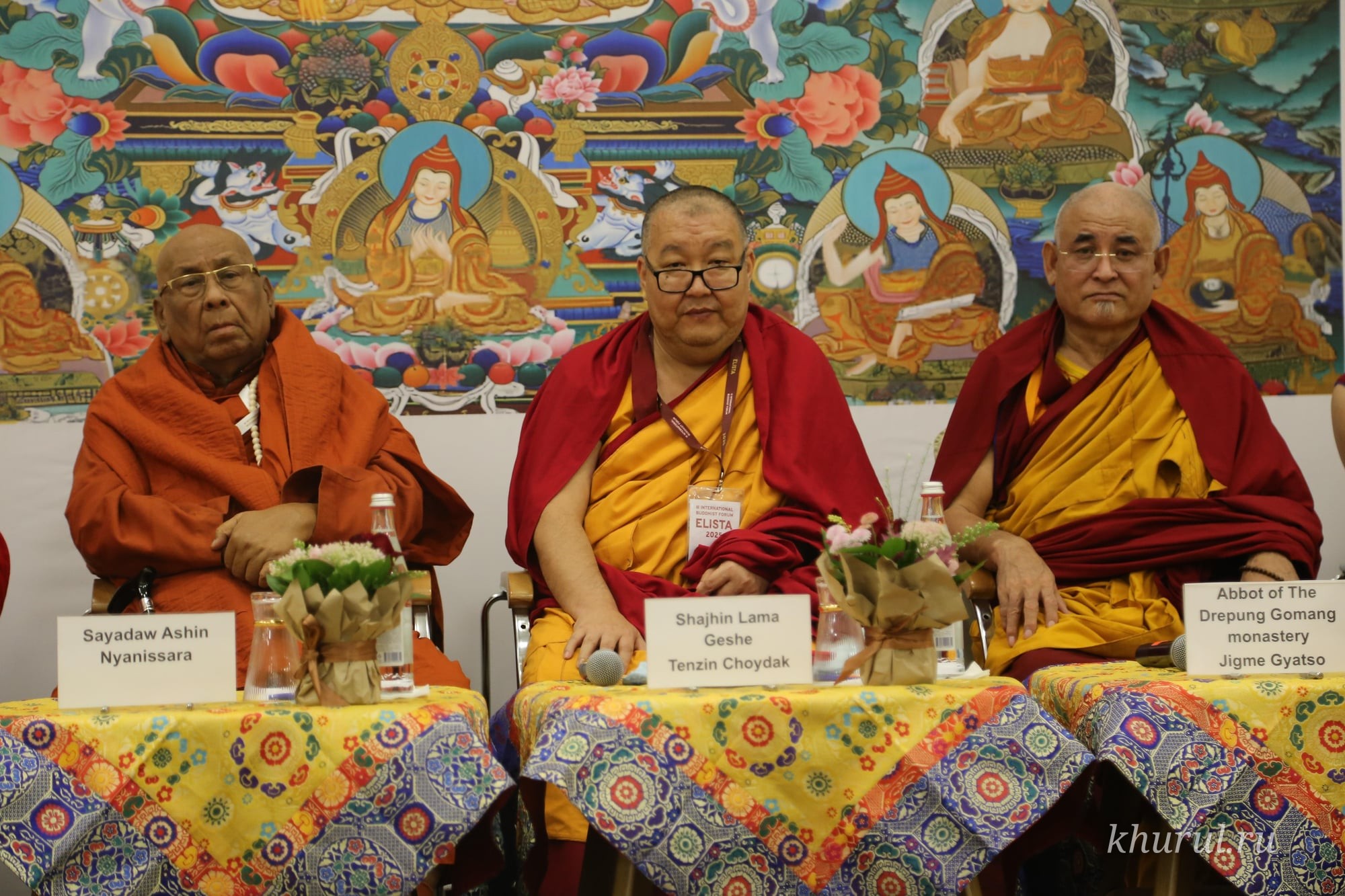
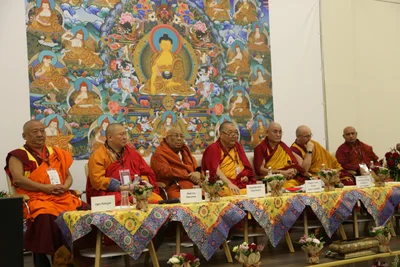
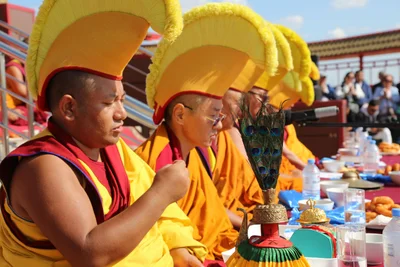
Dear faithful, here is a question for you: who do you think accumulates more spiritual merit: the one who brings his son to become a monk, or the one who makes rich offerings to 10 thousand clergymen? It was precisely with this question that Kensur Rinpoche Geshe Lobsang Gyaltsen, the former abbot of Drepung Gomang Monastery, opened the discussion; he moderated a session at the Central Khurul that took place recently within the framework of the International Buddhist Forum. Within the walls of “The Golden Abode of Buddha Shakyamuni,” the preservation of the institution of monasticism was discussed by distinguished guests — teachers of Buddhist philosophy and abbots of temples from India, Sri Lanka, Cambodia, Myanmar, Mongolia and Russia.
As the speakers noted, lay people have always provided great help in the matter of preserving the institution of monasticism by giving their sons to Buddhist temples, where they receive a spiritual education and go on to transmit and preserve the Teaching of the Buddha. The result of such actions is great merit both for the person who has decided to become a monk and for his entire family for many years to come.
The session participants also spoke about the significance of monks in people's lives; alongside their principal activity — spreading Buddhism throughout the world — they fulfill many roles, making a great contribution to the cause of peace and creation.
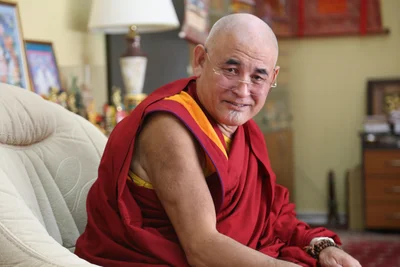
Among the speakers was the Shajin Lama of Kalmykia, Geshe Tenzin Choydak, who related that in former times the number of monks in our republic reached 4,000. Today it is counted in the dozens, which is why this topic is very important and relevant for the Kalmyk Monastic Sangha.
The abbot of Drepung Gomang Monastery, the Venerable Geshe Lharampa Jigme Gyatso, gave the example that after the occupation only 60 monks managed to reach southern India, and through their efforts and labor a new monastery was built and all the traditions were restored. Now more than 2,000 monks study at Drepung. This served as a kind of message to all the session participants that everything is possible — the main thing is time and action.
A representative of each country shared experience in matters of educating and training the new generation of monks, and, of course, how to harmoniously combine all of this while preserving traditions and adapting to modern conditions.
On the whole, the dialogue turned out to be interesting and all-encompassing. Undoubtedly, the result of such international interaction will be beneficial to every participant of the session held.